- Initial training - continuing education
- Aix and ENSOSP premises (2nd year)
- Alternance
- Eduniversal 2026 ranking: 3rd
Training presentation
The strategic evolution of territories and ministries has led to the need to manage security and defense in a grouped, interdepartmental fashion, linking the various territorial levels in a highly coordinated approach to professions that previously acted separately. These new logics are leading players in these sectors to develop ad hoc skills that public and private organizations are already feeling the pinch. This master's degree will help you to meet the challenges of management and coordination, while benefiting from the opportunity of partnerships with operators in the sector.
The Master's program is designed to build skills over two years. The first year covers theoretical, legal and technical aspects of public administration organization. The second year specializes students in the field of territorial security, particularly in terms of civil protection. The aim is to equip future professionals in regional security organizations with managerial and legal skills, in line with recent developments in the sector. This training program has been developed in partnership with theÉcole Nationale Supérieure des Officiers de Sapeurs-Pompiers, based in Aix-en-Provence.
Its aim is to train local and regional executives to manage local and regional safety. In particular, this involves developing a scientific culture and an openness to multidisciplinarity, in the service of regional safety issues.
This Master's program can be combined with the IMPGT + Talent Prep program.
-
Target audience
-Initial training: graduates with a Bachelor's degree, mainly in management, economics or law, or with a degree equivalent to a Bachelor's degree.
-Continuing education: professionals in equivalent positions in the public or private sector, in line with the professional development or consolidation project proposed by this program.
-
Skills
In line with the objectives of the training program, blocks of knowledge and skills (BCC) are offered.
Master 1:
- Understanding the environment of public and non-profit organizations
- Managing public policies in a context of societal transition
- Managing in public, non-profit and community organizations
- Apply a scientific method to public and territorial management
- Prepare/reflect on professional activity and social commitment in a changing world
In Master 2 :
- Understand the environment of organizations involved in territorial security
- Managing public policies to steer resilient territories
- Manage organizations by implementing protection and prevention measures
- Apply a scientific method to build and disseminate knowledge in the field of territorial security
- Develop one's career path and commitment to society by promoting one's expertise within a professional network
-
Training organization
> Master 1
Work-study program or compulsory 2-month internshipThe first year is common to several courses. It enables students to develop the skills essential to future public managers. In the second semester, a system of options (by block) enables students to draw up their career plans and move towards the "Security and Territorial Management" field.
Courses are taught on a semester-long basis, in the form of lectures and tutorials.
> Master 2
Work-study programStudents have 12 weeks of classes in Aix-en-Provence, on the Ferry site (from September 2025) and on the ENSOSP site (1 week per month). They benefit from work experience (around 3 weeks a month) and have exams spread over the academic year, enabling them to go back and forth with the field.
Theoretical and practical courses are combined with field experience, thanks to in situ visits and simulation exercises with socio-economic partners. Academics and practitioners from a variety of fields, including civil protection, local authorities and other public administrations, are involved in the curriculum.
Students wishing to prepare for state and local civil service entrance examinations can take an intensive preparatory course: the IMPGT + Talents in Public Services Prep.
-
Training content
Summary course content for the 2024-2025 and 2025-2026 academic years (indicative - subject to change)
Master 1 - semesters 1 and 2
Courses shared with the 8 Master's courses in Public Management (except MESS)
- Understanding the environment of public and non-market organizations: Conceptual and theoretical foundations: French public institutions and the main principles of public management, Administrative law for the public manager, Societal issues and public policies: cross-disciplinary approaches, European institutions and governance, Public policies and systems: sectoral approaches, Opening lectures and workshops.
- Managing public policies in a context of societal transition: Societal issues and public policies: cross-disciplinary approaches, Designing public policies: innovation and co-creation, Managing a territory, Public policies and systems: sectoral approaches, Steering and evaluating a public policy
- Managing in public, non-market and public-interest organizations: Conceptual and theoretical foundations: French public institutions and the main principles of public management, Design and organizational behavior, Project management (tools and methods), Leadership and team management, Managing the performance of public organizations.
- Specialties in SMT management functions: Evaluation of user-perceived quality, Societal issues and environmental public policies, Changes in local authorities, European mechanisms for territorial cooperation.
- Applying a scientific method to public and territorial management: Public policy design: innovation and co-creation, Territorial management, Design and organizational behavior, Research methods: information processing and retrieval, Quantitative and qualitative methodologies. Option 1: Public manager ethics and deontology, Option 2: Research awareness
- Preparing/reflecting on professional activity and social commitment in a changing world : Research methods: processing and reporting information, English, Supporting students in the professional world.
Cross-disciplinary courses: Serious Game, Internship or apprenticeship
Master 2 - semesters 3 and 4
- Understanding the environment of organizations contributing to territorial security: Local authority law, Public order and liberties, Security and responsibility, Territorial knowledge, Economics of territorial security, Role-playing in risk management, Unlikely seminar.
- Managing public policies to pilot resilient territories: Territorial knowledge, Territorial data analysis, Diagnostic methods, Risk scenario, Territorial security economics, Capability response design, Risk management role-playing, Dissertation
- Manage organizations by implementing protection and prevention measures: Security and liability, Feedback, Intelligence and cybersecurity, Risk management role-playing games
- Applying a scientific method to build and disseminate knowledge on territorial security: Analysis of territorial data, Diagnostic method, Feedback, Dissertation
- Develop your career path and your commitment to society by promoting your expertise within a professional network: Risk management role-playing games, Dissertation
-
Further studies and career opportunities
Further study:
- At the end of the 1st year of the Master's program: students can continue their studies in the 2nd year of the Public Management Master's program in Territorial Security and Management, or in one of the 8 other programs in this Master's program offered at the IMPGT, or in one of the other Master's programs in Law-Economics-Management.
- At the end of the two-year Master's program: students can continue their studies with a PhD in Management Sciences.
Career opportunities :
Graduates of this Master's program can move into the field of territorial security by joining the State or local civil service (with the possibility of joining the "Prépa Talents du Service Public" program offered by the IMPGT, to prepare for the competitive entrance exams). Graduates can also enter the private sector through consulting organizations or civil security research bodies at territorial, national or European level. -
Admission requirements
Admission is subject to application.
Master 1 - on the Mon Master platform
Candidates with a Bachelor's degree, mainly in management, economics or law, or with a degree equivalent to a Bachelor's degree. Applicants from political or social sciences or other backgrounds are also considered, provided they can demonstrate a good academic level and a clear motivation to change direction.
Master 2 - on the E-Candidat platform
Candidates who have completed the first year of a Master's degree in Public Management, or who have completed other university courses (law, economics, management), or who hold equivalent positions in the public or private sector, in line with the professional development or consolidation project proposed by this program.
VAP (Validation des Acquis Professionnels) is available for students who do not have the required level to enter the program.
-
Partnerships & training highlights
This course has been developed in partnership with theEcole Nationale Supérieure des Officiers de Sapeurs-Pompiers based in Aix-en-Provence.
 ENSOSP.png
Training presentation

In 2026, this course was awarded thePLUS label "Link with the Socio-Economic and Cultural World".
Portraits of IMPGTians - IMPGTiennes
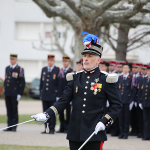
As a lieutenant-colonel in the fire department and head of division at ENSOSP, I head a team of 18 officers responsible for operational training courses for officers from mainland France and overseas territories. In addition, I coordinate the work of 900 instructors, officers and experts, to ensure the highes […]Read more
As a lieutenant-colonel in the fire department and head of division at ENSOSP, I head a team of 18 officers responsible for operational training courses for officers from mainland France and overseas territories. What's more, I coordinate the work of 900 officers and experts, to ensure that our trainees receive top-quality support.
What I like best about my job:
With 32 years' experience, this role keeps me as close as possible to operational action, while giving me the opportunity to make a modest contribution to the excellence of ENSOSP by teaching and providing attentive support to future firefighter managers.
Diploma obtained at IMPGT :
Master's degree in Public Management and Territorial Security and Management

Au quotidien, je participe à l’organisation des exercices et des visites de la chaîne de commandement du Sdis 33 sur les sites industriels du département. Je contribue aussi au suivi de dossiers liés aux installations classées et aux centrales photovoltaïques. […]Read more
Au quotidien, je participe à l’organisation des exercices et des visites de la chaîne de commandement du Sdis 33 sur les sites industriels du département. Je contribue aussi au suivi de dossiers liés aux installations classées et aux centrales photovoltaïques.
Ce que la formation m'a apporté dans mon travail au quotidien :
La formation m’a permis d’élargir ma vision des outils de planification mis à la disposition des collectivités et des administrations déconcentrées. Elle a également renforcé mes compétences en gestion de projet. Enfin, elle m’a aidé à mieux appréhender les enjeux futurs de la sécurité civile et à mieux identifier les acteurs qui contribuent à celle-ci.
Ce que j'aime le plus dans mon métier :
Ce que j'apprécie c'est que c'est un métier très dynamique au contact du terrain dans un sdis avec une forte activité opérationnelle.
Diplôme obtenu à l'IMPGT :
Master Management Public parcours Sécurité et Management des Territoires
Contact
Course leaders - Master 1 :


Course leaders - Master 2 :


Master 1 Schooling Department :

Master 2 Schooling Department :

Bureau de l'alternance :