- Initial training - continuing education
- Aix (1st year)
- Alternance
- Eduniversal 2026 ranking: 9th
Training presentation
Against a backdrop of ever-increasing social, health, environmental and industrial risks, Quality, Health, Safety and Environment functions are attracting growing attention in both public and private organizations. The increase in the number of natural disasters, and people's growing demand for preventive and protective action on the part of local players, means that skills linked to the reliability of services and products, the management of environmental externalities, and the analysis of major risks are essential to any organization.
This Master's degree in public management in the "Management, quality and societal risk management" field is designed to build skills over two years. Building on a first year that covers the theoretical, legal and technical aspects of public administration, the second year is designed to train tomorrow's quality managers and risk managers through theoretical and practical teaching, as well as by exposing them to the realities of the field through meetings with professionals working in these fields. Complementary courses, such as crisis management and project management, reinforce the expertise of these students, who are destined to join both public and private organizations.
-
Target audience
-Initial training: graduates with a Bachelor's degree, mainly in management, economics or law, or with a degree equivalent to a Bachelor's degree.
-Continuing education: professionals in equivalent positions in the public or private sector, in line with the professional development or consolidation project proposed by this program.
-
Skills
In line with the objectives of the training program, blocks of knowledge and skills (BCC) are offered.
Master 1:
- Understanding the environment of public and non-profit organizations
- Managing public policies in a context of societal transition
- Managing in public, non-profit and community organizations
- Apply a scientific method to public and territorial management
- Prepare/reflect on professional activity and social commitment in a changing world
In Master 2 :
- Understand the legal environment and societal expectations of QHSE functions
- Manage public policies to steer resilient territories
- Manage organizations using QHSE methods and standards
- Apply a scientific method to build and disseminate knowledge in the field of continuous improvement
- Develop your career and your commitment to society by promoting your expertise within a professional network
-
Training organization
> Master 1
Work-study program or compulsory 2-month internshipThe first year is common to several courses. It enables students to develop the skills essential to future public managers. In the second semester, a system of options (by block) enables students to define their professional project and choose the "Management, quality and societal risk management" field.
Courses are taught on a semester-long basis, in the form of lectures and tutorials.
Master 2
Work-studyThe program is organized on a sandwich course basis, with 13 weeks of classes, work experience (around 3 weeks per month) and exams spread over the academic year, enabling students to work in the field on a regular basis. Students are required to write a dissertation on the training they have received and the experience they have acquired through their work-study program, and to help them build a professional network.
Students are supervised by two available teaching managers, benefit from a school reception area on the same site as the courses, and meet over twenty professionals and teachers to help them make the best possible transition into professional life.
-
Training content
Summary course content for the 2024-2025 and 2025-2026 academic years (indicative - subject to change)
Master 1 - semesters 1 and 2
Courses shared with the 8 Master's courses in Public Management (except MESS)
-Understanding the environment of public and non-market organizations: Conceptual and theoretical foundations: French public institutions and the main principles of public management, Administrative law for the public manager, Societal issues and public policies: cross-disciplinary approaches, European institutions and governance, Public policies and systems: sectoral approaches, Opening lectures and workshops.
-Managing public policies in a context of societal transition: Societal issues and public policies: cross-disciplinary approaches, Designing public policies: innovation and co-creation, Managing a territory, Public policies and systems: sectoral approaches, Steering and evaluating a public policy
-Managing in public, non-market and public-interest organizations: Conceptual and theoretical foundations: French public institutions and the main principles of public management, Design and organizational behavior, Project management (tools and methods), Leadership and team management, Managing the performance of public organizations.
- MQGRS management function specialties: Quality management systems, Evaluation of user-perceived quality, Societal issues and environmental public policies, Occupational risks & Quality of life at work.
-Applying a scientific method to public and territorial management: Public policy design: innovation and co-creation, Territorial management, Design and organizational behavior, Research methods: information processing and retrieval, Quantitative and qualitative methodologies. Option 1: Public manager ethics and deontology, Option 2: Research awareness
-Preparing/reflecting on professional activity and social commitment in a changing world : Research methods: processing and reporting information, English, Supporting students in the professional world.
Cross-disciplinary courses: Serious Game, Internship or apprenticeship
Master 2 - semesters 3 and 4
-Understanding the legal environment and societal expectations of QHSE functions: Environmental law, Quality of healthcare establishments, Quality of public services, Sector standards, Governance of public action and citizen participation, Unlikely seminar
- Managing public policies to steer resilient territories: Quality of public services, Risk management role-playing, Societal responsibility, Energy transition and climate change, Foundations of territorial resilience
-Manage organizations using QHSE methods and standards: Health and safety management, Quality management, Environmental management, Sector standards, Societal responsibility, Project management, Public marketing and environmental behavior, Organizational reliability, Crisis management role-playing, Performance assessment, Quality and management of information systems.
-Apply a scientific method to build and disseminate knowledge about continuous improvement: Dissertation
-Develop your career path and your commitment to society by promoting your expertise in a professional network: Crisis management role-playing game, Risk management role-playing game, Governance of public action and citizen participation, Professional integration, Project management, English, Dissertation
-
Further studies and career opportunities
Further study:
- At the end of the 1st year of the Master's program: students continue their studies in the 2nd year of the Public Management Master's program in Management, Quality and Societal Risk Management, or in one of the 8 other Master's programs offered at the IMPGT, or in one of the other Master's programs in Law-Economics-Management.
- At the end of the two-year Master's program, students can pursue their studies with a Doctorate in Management Sciences.
Career opportunities :
Graduates of this Master's program go on to work in the fields of quality, safety and the environment, in both the private and public sectors, in positions such as Quality, Environment, Health and Safety Manager, Major Risk Manager / Risk Manager, or Project Manager / Consultant on specific topics (CSR, circular economy, waste management, quality of life at work, evaluation...). Other students take competitive exams for the civil service or set up their own business (consulting, innovation, etc.).
-
Admission requirements
Admission is subject to application.
Level of French required and recommended: C1 - C2Master 1 - on the Mon Master platform
Candidates with a Bachelor's degree, mainly in management, economics or law, or with a degree equivalent to a Bachelor's degree. Applicants from political or social sciences or other backgrounds are also considered, provided they can demonstrate a good academic level and a clear motivation to change direction. A refresher MOOC is available for students who do not come from specialized management or public sector backgrounds.Master 2 - on the E-Candidat platform
Candidates who have completed the first year of a Master's degree in Public Management, or who come from other academic backgrounds (law, economics, management), or who hold equivalent positions in the public or private sector, in line with the professional development or consolidation project proposed by this program.VAP (Validation des Acquis Professionnels) is available for students who do not have the required level to enter the program.
Training presentation

In 2026, this course was awarded thePLUS label "Link with the Socio-Economic and Cultural World".
Portraits of IMPGTians - IMPGTiennes
My missions consist in piloting the establishment's project approach through the follow-up and evaluation of the objectives; in producing reports; in accompanying the training group in the approach related to ISO 9001 and Qualiopi certifications: quality policy, process approach, setting indicators, risk mana […]Read more
My missions consist in piloting the establishment's project approach through the follow-up and evaluation of the objectives; in producing reports; in accompanying the training group in the approach related to ISO 9001 and Qualiopi certifications: quality policy, process approach, setting indicators, risk management, drafting procedures, preparing and leading internal audits and management reviews; conducting internal and external satisfaction surveys, processing and implementing action plans; supervising and leading training sessions on quality management for agents; leading projects (e.g. creation of a dashboard); actively participating in the operational field: monitoring, statistics, communication and finally conducting economic studies to enhance the value of operational action - publications.
What I like most about my job :
- The diversity of the missions
- The diversity of profiles with whom I work
- The project-based approach
- The autonomy
Degree obtained at IMPGT:
Master 2 Public management course - Quality management and societal risk management (2017-2018)

My job as a Health, Safety and Environment (HSE) officer is to reduce risks in the workplace: accidents, near misses, occupational illnesses, etc. I have to identify the risks of malfunctioning in the organization as a whole or in more specific areas and recommend corrective or preventive actions depending on […]Read more
My job as a Health, Safety and Environment (HSE) officer is to reduce risks in the workplace: accidents, near misses, occupational illnesses, etc. I have to identify the risks of malfunctioning in the organization as a whole or in more specific areas and recommend corrective or preventive actions according to the degree of risk. In addition, I must be able to convince both management and employees of the merits of my approach... while demonstrating pedagogy to ensure that the changes are implemented smoothly.
What I like most about my job :
The fact of being in a "support function" necessary for the smooth running of the company, that it touches all departments of the organization and allows to acquire transversal skills.
Degree obtained at IMPGT:

My first mission is the preparation and implementation of the various audits. The second is to manage the documentation system. In terms of evaluation, internal and external surveys are conducted. Finally, my last mission is to update the Single Occupational Risk Assessment Document (DUERP). In addition to th […]Read more
My first mission is the preparation and implementation of the various audits. The second is to manage the documentation system. In terms of evaluation, internal and external surveys are conducted. Finally, my last mission is to update the Single Occupational Risk Assessment Document (DUERP). In addition to these missions, I lead various bodies.
What I like most about my job :
- Teamwork
- Field visits
- The challenges
Diploma obtained at the IMPGT :
Master 2 Public Management track - Quality Management and Societal Risk Management (2018-2019).

My missions are varied and wide-ranging, both at the strategic and operational levels: creation of the Sustainable Development and Social Responsibility master plan, benchmarking, and management of operational projects. Project management is an integral part of my daily work. […]Read more
My missions are varied and wide-ranging, both at the strategic and operational levels: creation of the Sustainable Development and Social Responsibility master plan, benchmarking, and management of operational projects. Project management is an integral part of my daily life.
What I like most about my job :
My missions are driven by the general interest, which is an important source of motivation for me on a daily basis. The transversal nature of the issues at stake in my job leads me to interact with a wide variety of people both inside and outside the University. This brings me a very enriching dynamic.
Diploma obtained at the IMPGT :
Master 2 Public Management course Quality Management and Societal Risk Management (2018-2019).

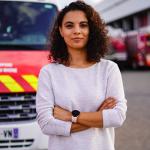
Second officer of the Fire and Rescue Center of Leuven, I have two distinct hats. The first is administrative. We are only two officers for a hundred or so personnel and we have to supervise the human resources aspect, the training and education of the personnel, the technical aspect and the infrastructure […]Read more
First officer of the Fire and Rescue Center of Leuven, I have two distinct hats.
The first is administrative. We are only two officers for a hundred or so personnel and we have to supervise the human resources aspect, the training and education of the personnel, the technical aspect and the infrastructures of the center in addition to transverse missions for the Marine Fire Battalion of Marseille (creation of orders, studies, investigation, project?).
As a substitute for the president of the officers of the Marseille Marine Fire Battalion, I am also invited to meetings and associated work.
My second hat is operational. I am a group leader and I am engaged as a Commander of Rescue Operations (COS) on large-scale interventions such as fires, road accidents, gas leaks, and large-scale health missions.
In the field, I almost always have at least twenty people under my command. The Fire and Rescue Center makes about 18500 interventions per year (that is to say almost 51 interventions per day) and having 30 vehicles at disposal, the operational activity is intense.
I am also a specialized officer for helicopter interventions, I can be involved in specific/inaccessible forest fires, ship fires at sea and counter-terrorism operations. Currently undergoing European training, I will eventually be deployable under the aegis of the European Civil Protection Mechanism on very large-scale operations following wars or natural disasters.
In addition to these two hats, I intervene as a GOC3 trainer at the ENSOSP (Aix pole and Vitrolles technical platform) as well as a FDF3 trainer at the ECASCValabre.
What I like the most in my job :
The daily challenge of the job. It has, for me, a deep meaning. Having so many organic and operational responsibilities in a first job allows you to grow very quickly from a professional and human point of view. No two days are alike, with many imponderables, whether administrative or operational, arising daily.
The diversity of the profession is particularly enriching and the continuous evolution, whether through assignments or training, allows for a real development of skills. The military framework requires a systematic rigor and a 365/24 involvement, without fail.
The credibility and trust of the men must be earned daily, as the former General De Villiers said.
Diploma obtained at the IMPGT :
Master 2 Public Management course - Quality Management and Societal Risk Management (2018-2019).
Contact
Teaching staff - Master 1 :


Course leaders - Master 2 :


Master 1 Schooling Department :

Master 2 Schooling Department :

Bureau de l'alternance :